Temasek Polytechnic · Visitor research
The Bicentennial Experience.
A study of what visitors expected, how they experienced Singapore’s Bicentennial exhibition, and where the visit could be improved.
- School
- Temasek Polytechnic
- Modules
- Product and Service Marketing & Experiential Marketing
- Tutor
- Mr Matthew and Mr Paul
- Project team
- Group 4
From Singapore to Singaporean
About the exhibition
The Bicentennial Experience was the flagship exhibition of Singapore’s 2019 Bicentennial at Fort Canning Centre. It told roughly 700 years of Singapore’s history through two experiences. Time Traveller was an indoor, five-act journey with live performance and multimedia. Pathfinder was an outdoor trail of interactive installations.
We studied the exhibition as a service, paying attention to how information, guides, seating and physical effects shaped what visitors took away.
The Bicentennial Experience at Fort Canning · National Library Board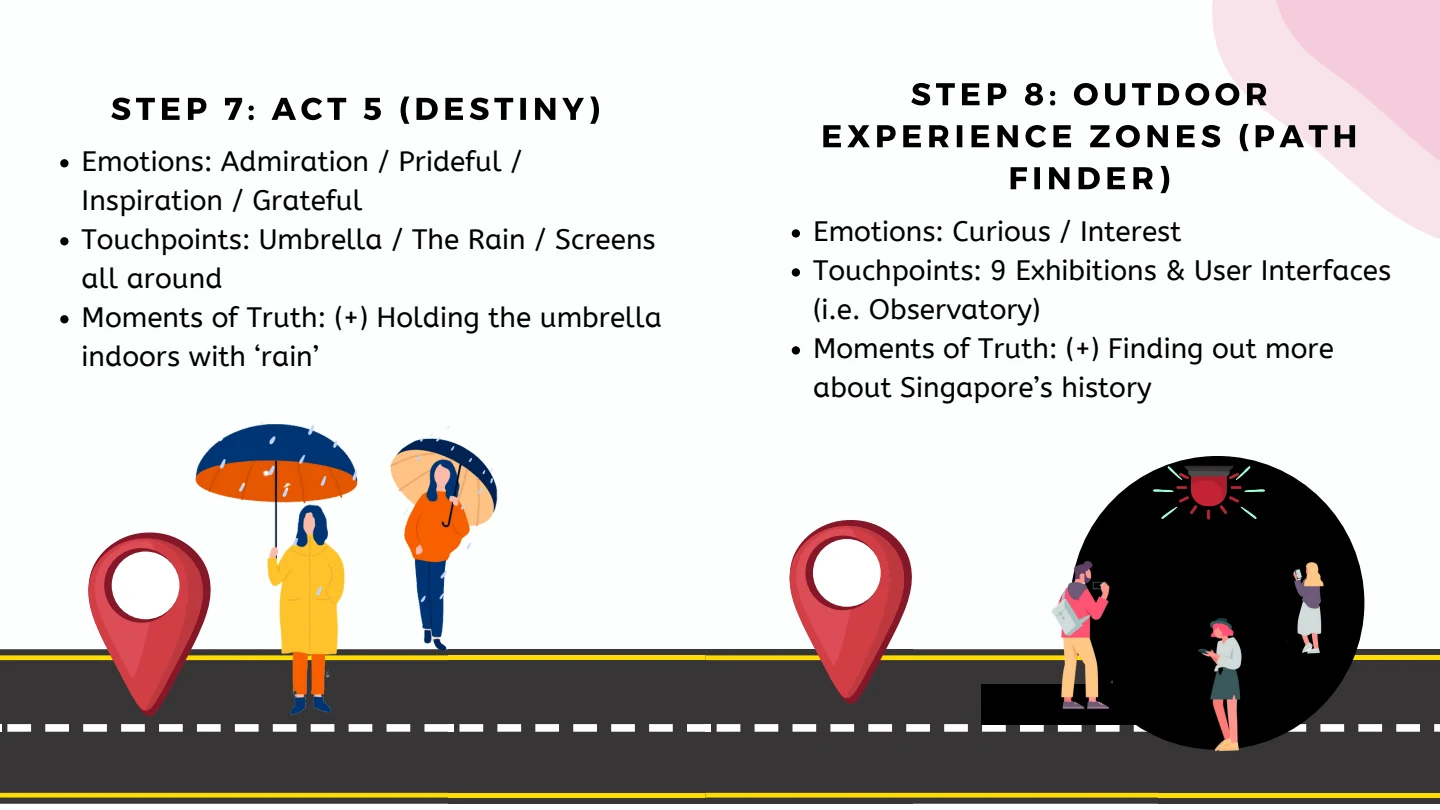
Audience and expectations
Why visitors made the trip
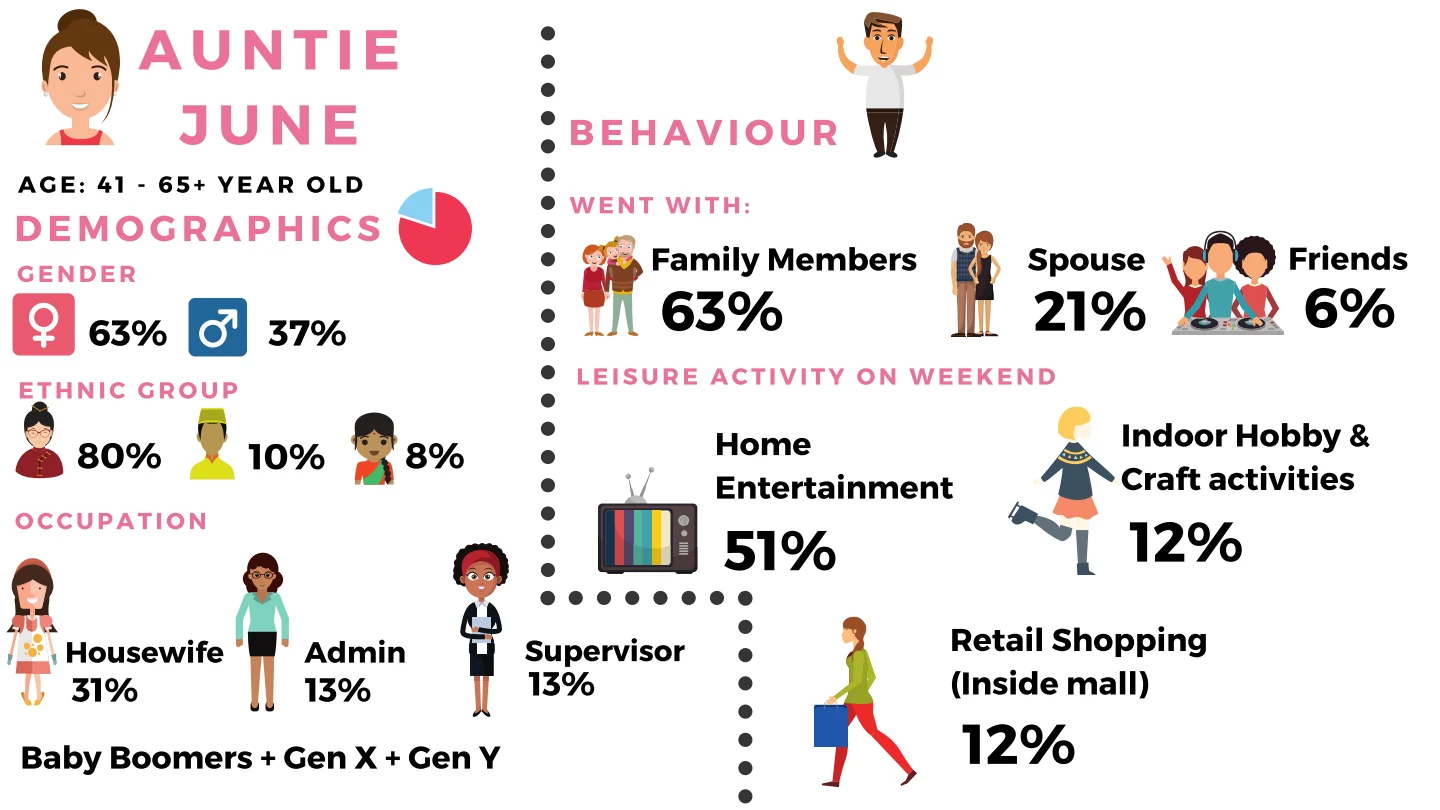
Our team focused on adults around 41 to 65 and built a composite visitor persona named Auntie June. The persona brought together what visitors wanted to know before arriving, who they went with, and why the exhibition appealed to them. In the project findings, 63% looked for tickets and timings and 86% cited a day out with family or friends as a reason to visit.
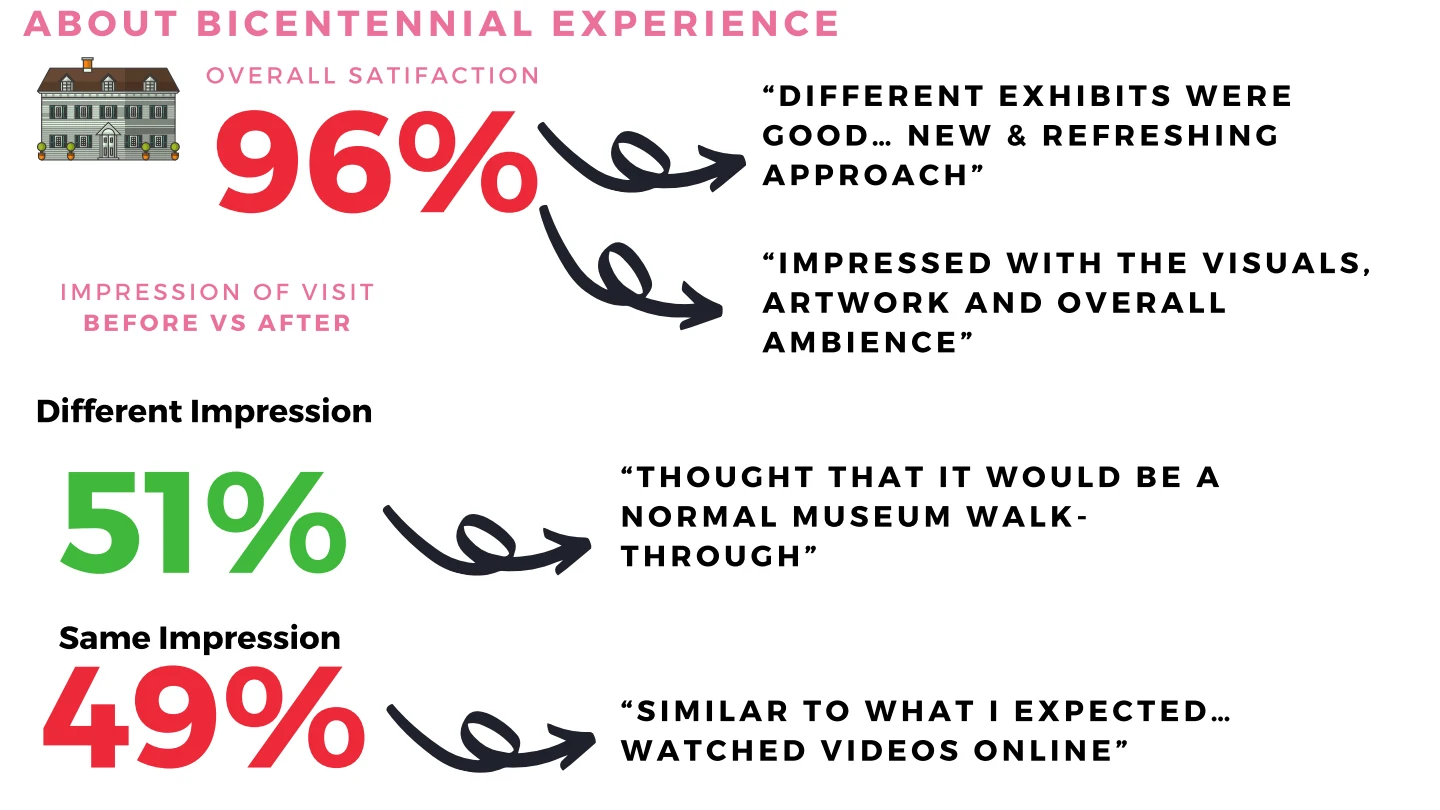
Some visitors expected a conventional museum walkthrough. The comments in our deck show that the visuals, artwork and atmosphere helped change that expectation for some of them.
- Overall satisfaction
- 96%
- Reported a different impression after visiting
- 51%
Customer journey
What shaped the visit
We mapped nine stages from researching the exhibition to sharing it afterward. At each stage, we recorded the touchpoint, how visitors felt, and what staff or exhibition design could do to help.
Before the show
Planning and arrival
The website helped visitors find ticket and timing information. At the entrance, staff welcomed and directed them. These interactions shaped the visit before the first act began.
Acts 1–2
Beginnings and Arrival
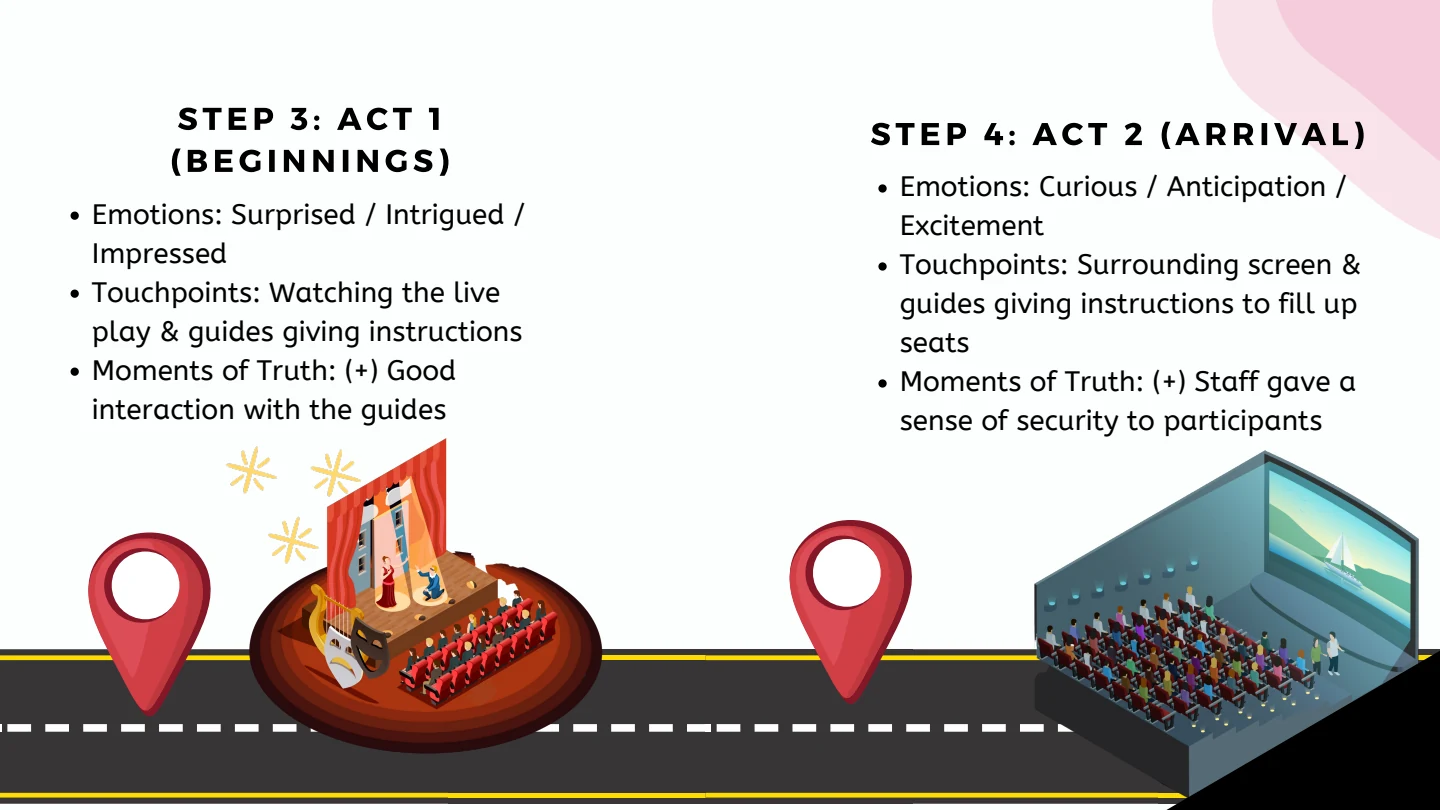
Live performance introduced early Singapore. The next act used a surrounding screen, with guides helping visitors settle in and find seats.
Acts 3–4
Connectivity and Occupation
Rotating seats changed how visitors experienced the projections. The wartime bunker then shifted the mood. Guides helped orient visitors in a dark, confined space.
Act 5 and outdoors
Destiny and Pathfinder
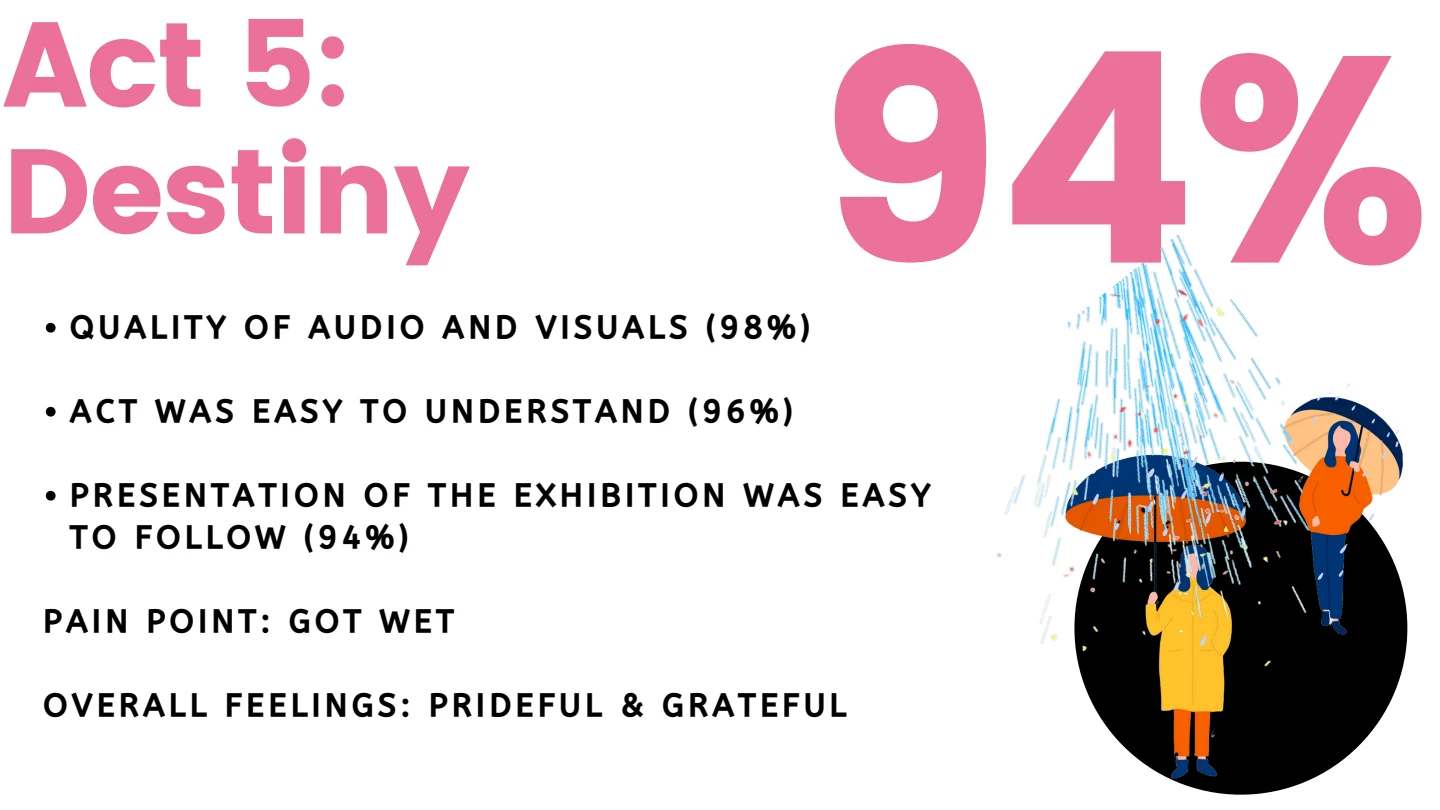
The finale used indoor rain, umbrellas and surrounding screens. Visitors could then explore interactive installations outdoors, including the Observatory.
After the show
Sharing the visit
The journey map identified Instagram stories and posts as ways visitors could share what they had seen and felt.
Experience design
Three acts, three friction points
The group looked closely at Beginnings, Occupation and Destiny. Each used a different technique to bring history to life, and each surfaced a specific visitor need.
Act 1 · Beginnings
Visitors praised the maritime trading story and found it easy to follow. Those seated at the sides sometimes struggled to see the performance, which made sightlines a practical issue to address.
Act 4 · Occupation
The bunker created a sense of confinement that supported the wartime story. Some visitors found the room dark and small, making the guides’ reassurance and directions especially important.
Act 5 · Destiny
The indoor rain was a memorable part of the finale. In the project findings, 98% rated the audio and visuals positively, though some visitors reported getting wet.
Service recommendations
Prepare visitors and act on their feedback
Our team proposed short briefings before each act so visitors could anticipate what would happen. We also proposed collecting feedback after each act, when issues with sightlines, pacing or comfort would still be fresh.
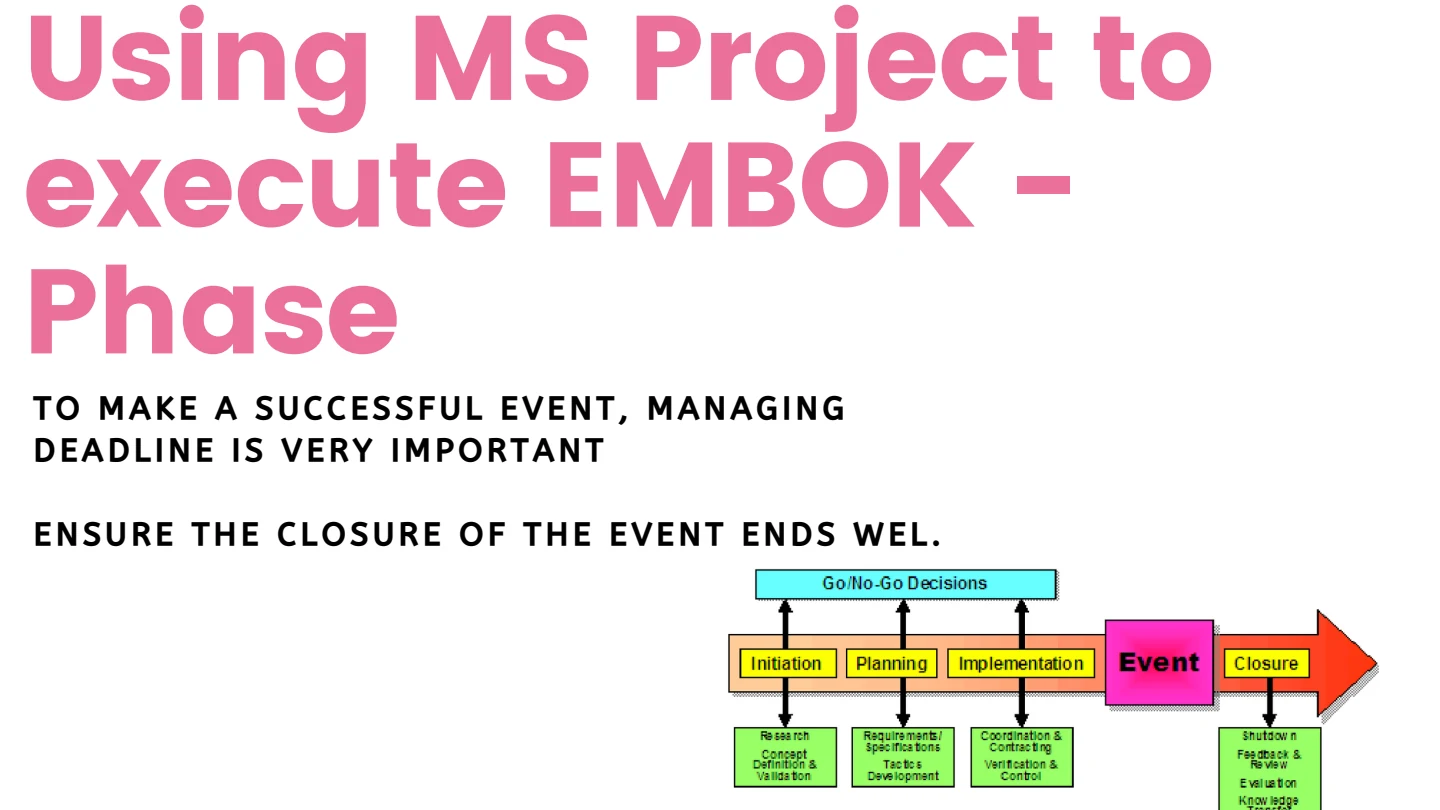
For event delivery, we recommended using Microsoft Project to track deadlines and decisions across the Event Management Body of Knowledge phases, from initiation through closure. The project’s final presentation brought the visitor persona, journey map, act-by-act findings and recommendations together.